
When a brand launches its first purpose-built Late Model chassis, it matters. Not because the category needs another generic platform, but because Late Model racers are quick to spot whether a car was designed around the class from day one or adapted to fit it later. The Velocity RC VL-2 Late Model Kit arrives with exactly that promise: a clean-sheet entry built specifically for Late Model racing, with a feature list that leans hard into durability, tuneability, and an easier build process.
That combination is what makes the VL-2 interesting right away. In classes where small setup changes can noticeably alter corner entry, side bite, and drive off the turn, the foundation has to be precise before it can be fast. Velocity RC presents the VL-2 as a heavily tested platform, and even from the official specs alone, you can see that the company has focused on the areas experienced racers care about most: steering support, suspension consistency, rear-end tuning, and differential position.
At its core, the VL-2 is a Late Model kit aimed at racers who want a serious chassis rather than a casual ready-to-run shortcut. It is sold as a kit, and Velocity RC clearly states that the body, wheels, and tires are sold separately. That tells you exactly where this model sits in the market: this is for hobbyists who want to choose their own finishing components and build the car around their track, tire program, and racing style.
It also looks like a smart fit for two kinds of buyers. The first is the experienced oval racer who wants a modern platform with meaningful setup options built in from the start. The second is the committed builder stepping into the class and looking for a package that, according to the manufacturer, has been designed to be easy to build while still offering enough adjustment to grow with the driver. That balance is not trivial. A car can be very adjustable and still be frustrating to assemble or maintain. Velocity RC is clearly trying to avoid that trap.
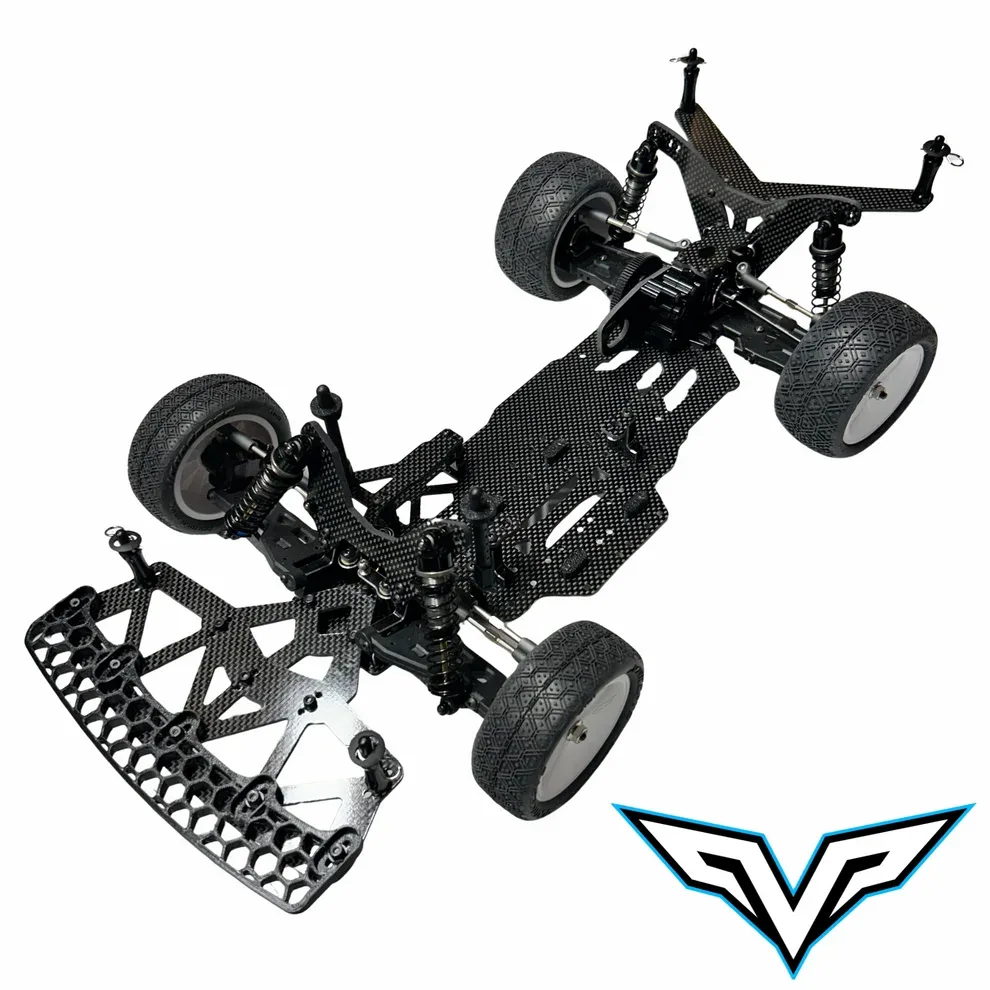
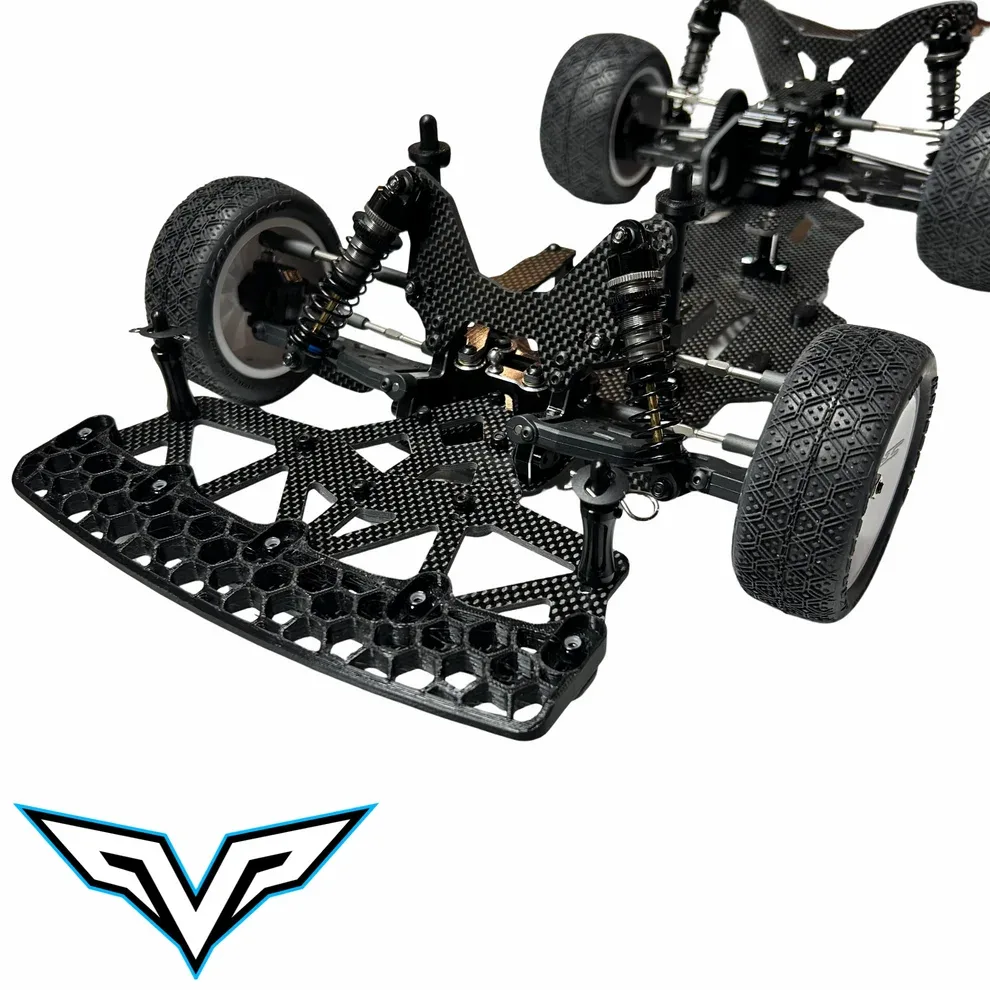
The photos reinforce that impression. The VL-2 has a very crisp, race-focused layout dominated by carbon fiber and black-anodized hardware, with a low, purposeful stance and a lot of visual openness through the center of the chassis. The cutouts in the main plate and front bumper area are especially striking. Up front, the honeycomb-style bumper structure gives the nose a technical, lightweight look, while the chassis itself uses aggressive machining patterns and openings that make the whole car look clean rather than bulky.
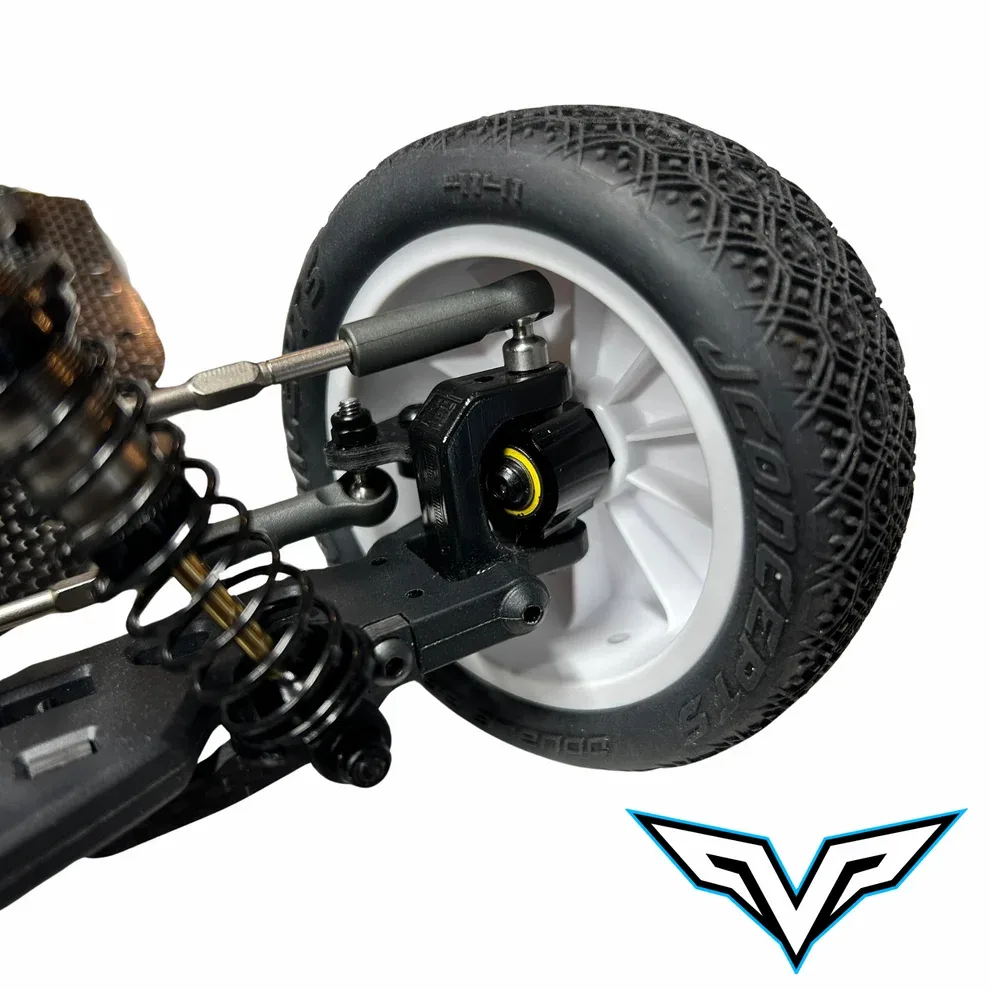
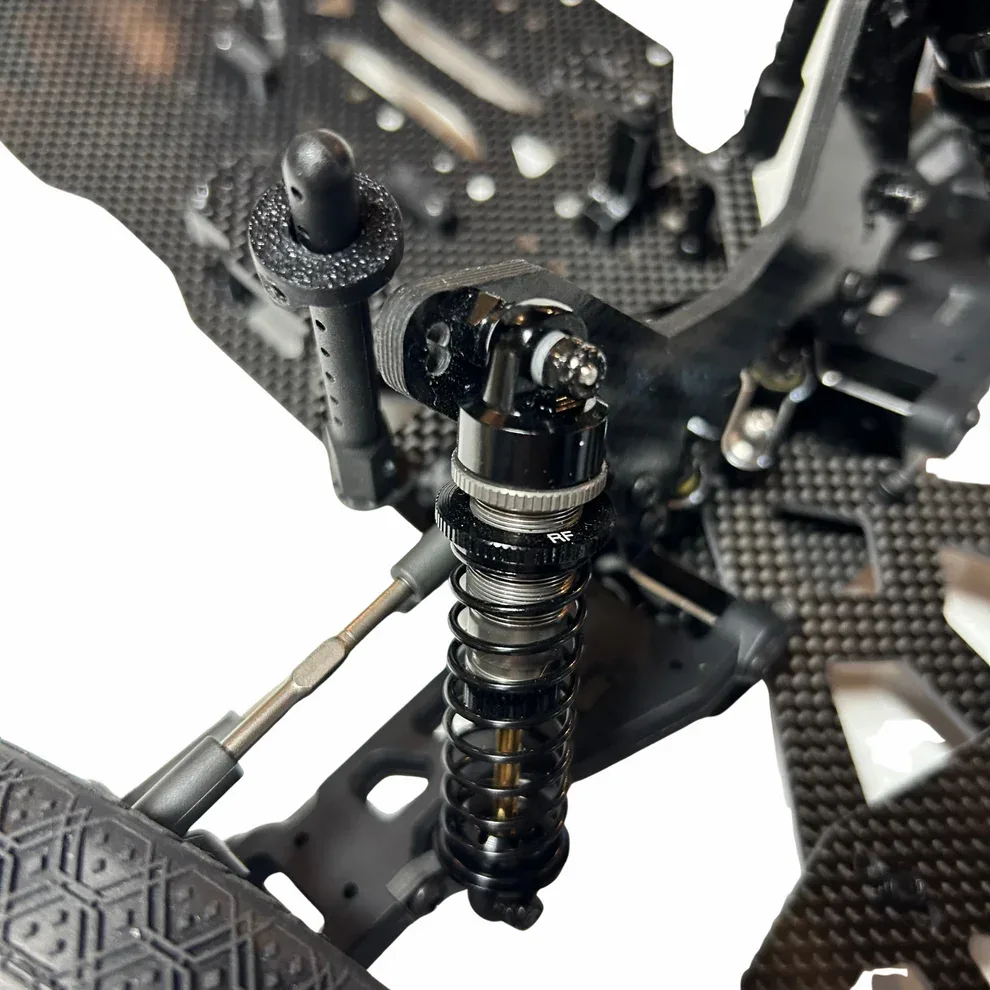
The shock towers stand out immediately. The weave of the carbon fiber is clearly visible, and the front and rear towers have that sharp, flat-edged competition look racers love to see on the bench. Close-up photos also show neat packaging around the suspension and steering areas, with turnbuckles, shock bodies, spring collars, and pivot points all presented in a very accessible way. The wheel and tire package shown in the photos gives the chassis the right Late Model attitude, but it is important to remember that Velocity RC lists the body, wheels, and tires as separate purchases.
The technical story starts with the steering system. Velocity RC specifies a ball bearing supported aluminum steering assembly, and that is one of those features that pays off every lap even if it is not flashy on a spec list. A properly supported aluminum steering setup is about accuracy and consistency. It helps keep the steering action smooth and direct, and in a class where you are constantly balancing precision with stability, reduced slop is a real advantage. If you are chasing repeatable front-end response through changing track grip, this is exactly the kind of component choice you want to see.
The suspension hardware follows the same logic. Aluminum spindles and aluminum rear hubs are included as standard, and that points to a platform designed for stiffness, durability, and dependable geometry under load. Velocity RC also equips the VL-2 with HD 4 mm carbon fiber shock towers, a spec that matters because shock tower rigidity has a direct effect on how faithfully your damping package works. If the tower flexes too much, the shocks are not doing the same job lap after lap. A stout tower gives the suspension a more stable reference point, which is especially useful when you begin making finer spring and damping changes.
The shocks themselves deserve attention because Velocity RC did more than simply state that shocks are included. The VL-2 uses small bore shocks with location-etched spring collars for small or big bore springs, machined Delrin pistons, low friction X-rings, and aluminum standoffs with Delrin pivot balls. That combination suggests a strong emphasis on smooth travel, tuning flexibility, and reduced bind at the mounting points. Etched collars are a practical racer touch because they make adjustments easier to track at the bench. Delrin pistons and pivot balls are the kind of material choices builders appreciate for their smoothness and low-friction behavior. In real setup terms, these details can make the car easier to tune consistently, because the suspension is free to move without adding unnecessary stickiness into the system.
Then there are the two features that will probably grab the attention of seasoned Late Model racers fastest: the adjustable flex rear design and adjustable differential height. These are not decorative talking points. Rear flex tuning affects how the chassis loads and releases through the corner, which can influence side bite, rotation, and how settled the car feels when grip changes. Differential height adjustment, meanwhile, is a valuable tuning lever for altering driveline relationship and rear-end behavior. On different surfaces and traction levels, that can become a meaningful tool for shaping how the car drives off the corner and how planted it feels under power.
Technical specifications
Brand: Velocity RC
Model: VL-2 Late Model Kit
Part number: 00021
Price: 624.95 USD
Shock towers: HD 4 mm carbon fiber
Steering assembly: Ball bearing supported aluminum steering assembly
Spindles: Aluminum
Rear hubs: Aluminum
Shocks: Small bore
Spring collars: Location-etched spring collars for small or big bore springs
Shock pistons: Machined Delrin pistons
Shock seals: Low friction X-rings
Shock standoffs: Aluminum standoffs with Delrin pivot balls
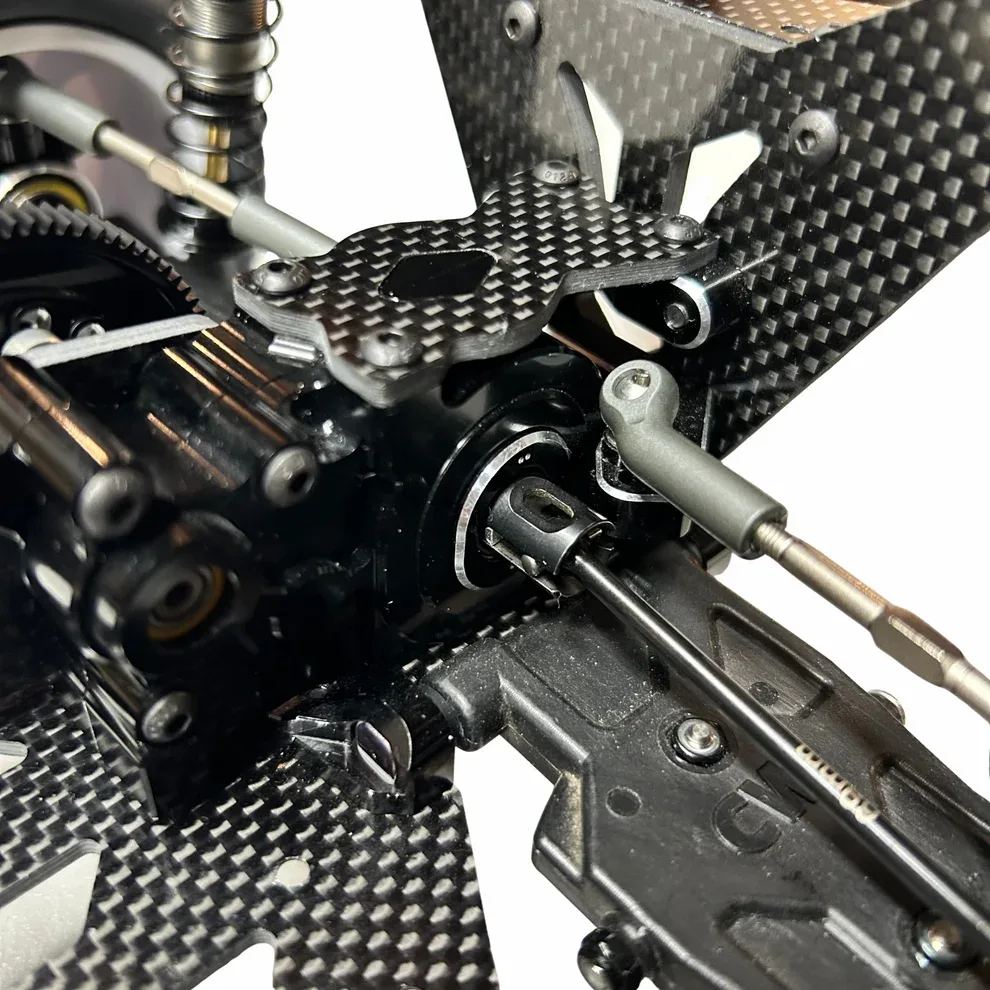
Rear design: Adjustable flex rear design
Differential height: Adjustable
Included note: Body, wheels, and tires sold separately
Shipping note: Shipping last week of October
From an expert point of view, the biggest strength of the VL-2 is that its key features are aimed at the areas that separate a race kit from a parts-bin special. The hardware list is not overloaded with vague claims. Instead, it focuses on steering precision, durable alloy suspension points, rigid carbon support pieces, and a rear section that offers real tuning paths. That is the stuff that matters when a setup change needs to show up on track in a clear, repeatable way.
This looks like the right choice for the racer who enjoys building, measuring, and tuning as much as driving. If your idea of fun is finding a cleaner balance in the center of the turn or calming the rear end without taking away drive, the VL-2 appears to give you the kind of platform that invites those adjustments. It also looks attractive for racers who value neat mechanical access, because the photo layout suggests a chassis that should be friendly when it is time for maintenance or setup work.
What should buyers keep an eye on? First, this is a kit-level purchase, so the final package depends on the electronics and finishing components you choose, and Velocity RC specifically notes that body, wheels, and tires are not included. Second, a car with useful setup range rewards drivers who take the time to understand it. Adjustable rear flex and differential height can be powerful tools, but like any serious tuning option, they work best when changes are made methodically.
The Velocity RC VL-2 Late Model Kit enters the scene with the kind of specification sheet that gets experienced oval racers leaning closer to the screen. It is purpose-built, visually sharp, and packed with hardware choices that suggest careful attention to how a Late Model should go together and how it should respond to tuning.
If Late Model racing is your lane, this is one to put on your shortlist and study carefully. For the full product details, current listing information, and official updates, head to the manufacturer’s website at Velocity RC.