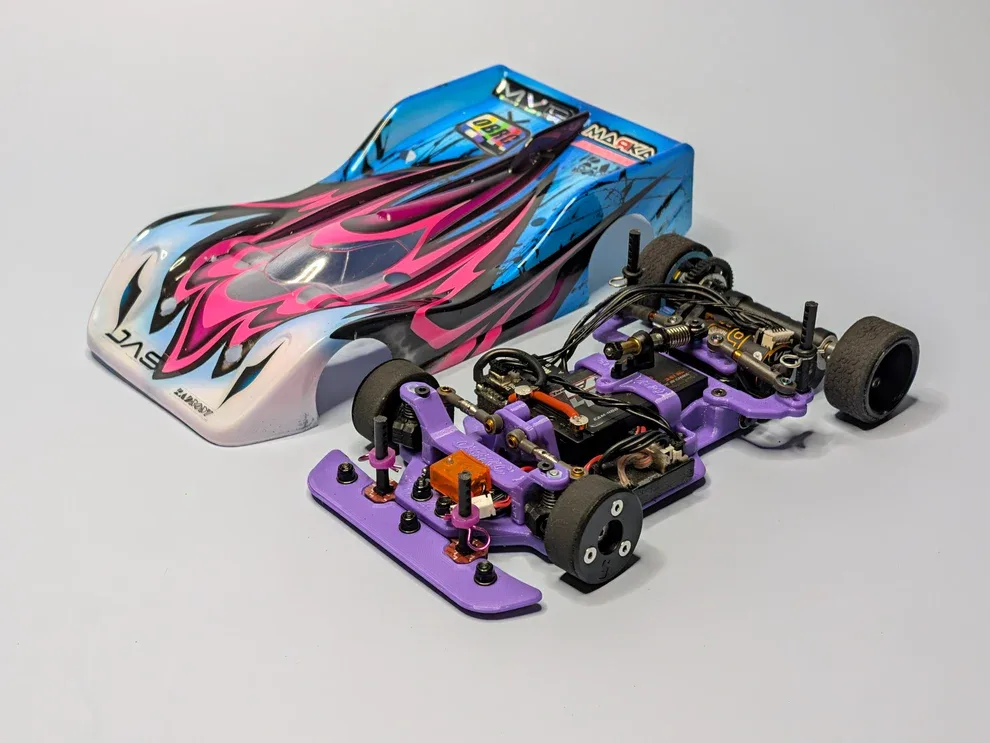
When a 1:28 chassis is designed for home printing yet engineered with true racing logic, it deserves a closer look. The OBRC OBZ V3 embodies this philosophy: a project aimed at making micro-scale racing accessible without compromising on performance, serving as a serious platform for those eager to assemble, tune, and race.
This 3D-printable race chassis, developed by OBRC with contributions from world and national champions, frame designers, and local drivers, sends a clear message: it’s not a desk toy, but a base aimed at those who appreciate the technical side of the category and seek a competitive, open platform compatible with a wide range of 1:28 components, electronics, and bodies.
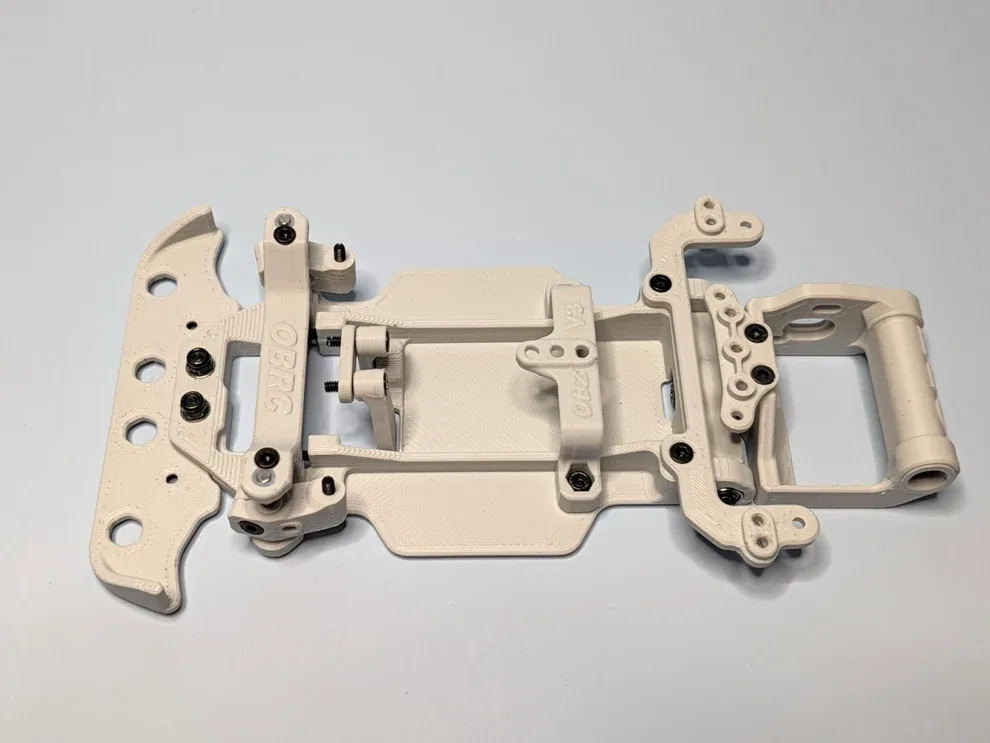
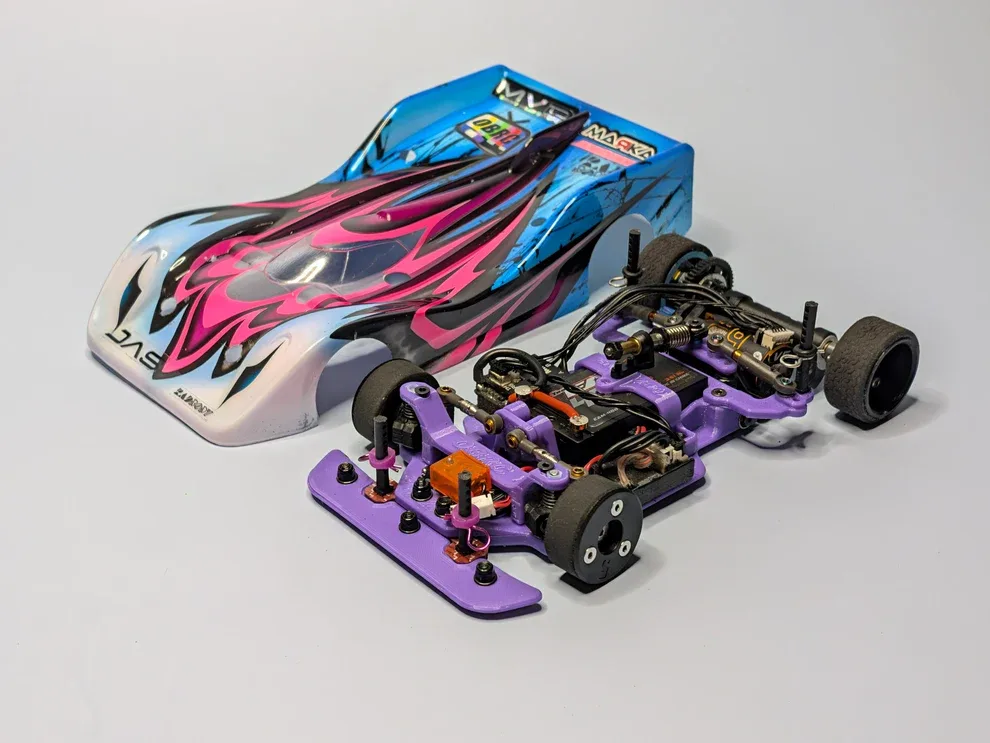
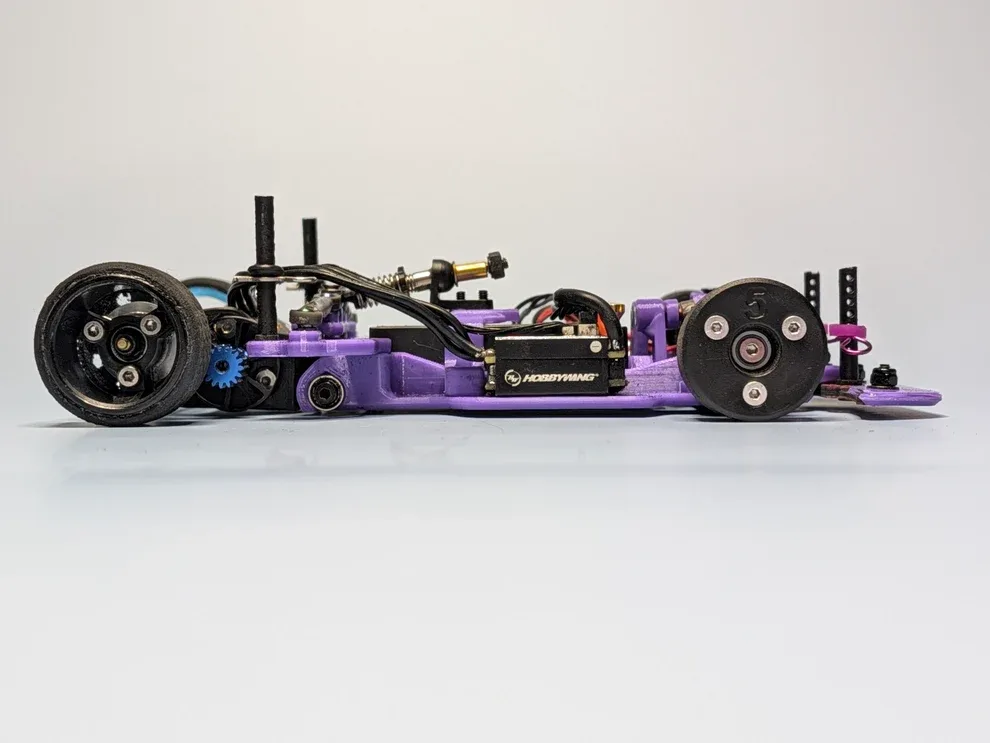
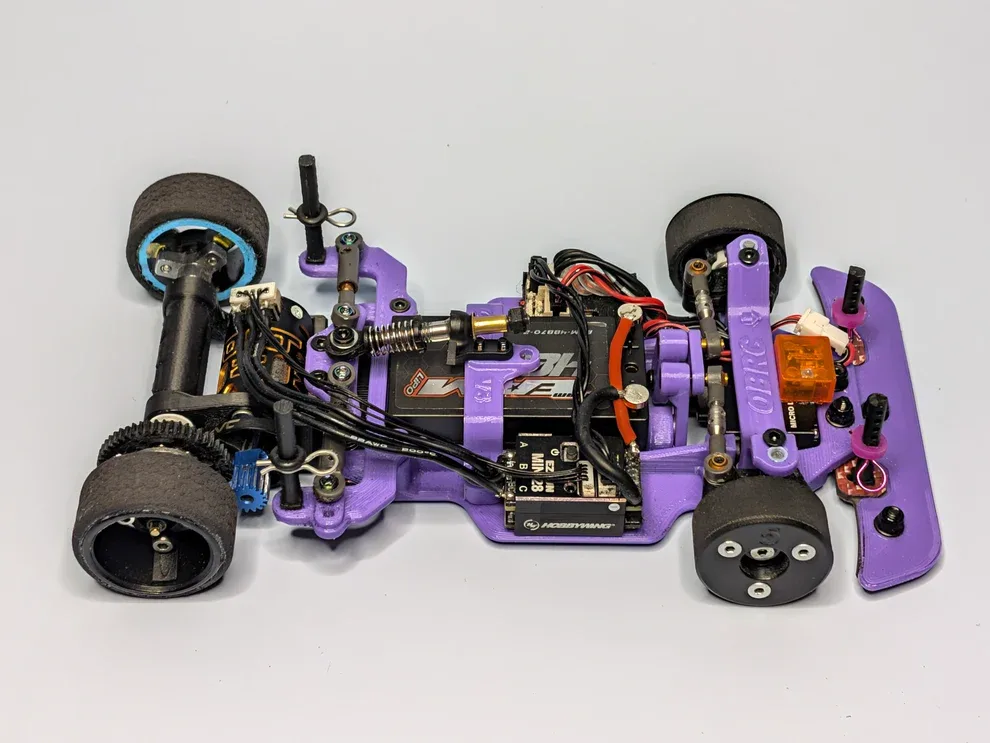
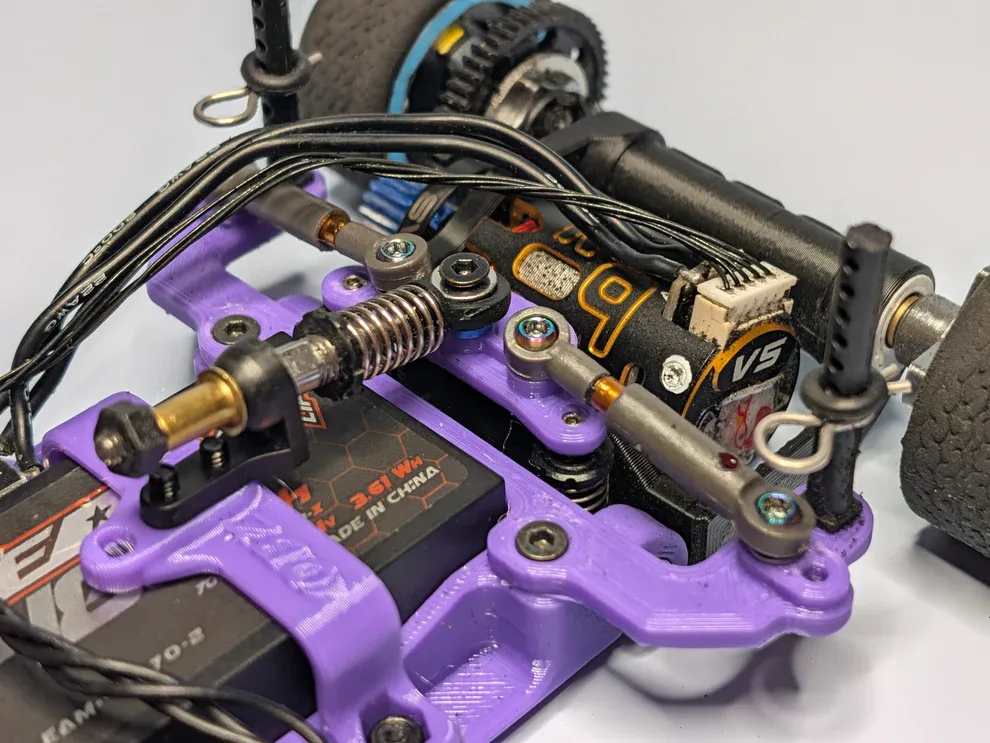
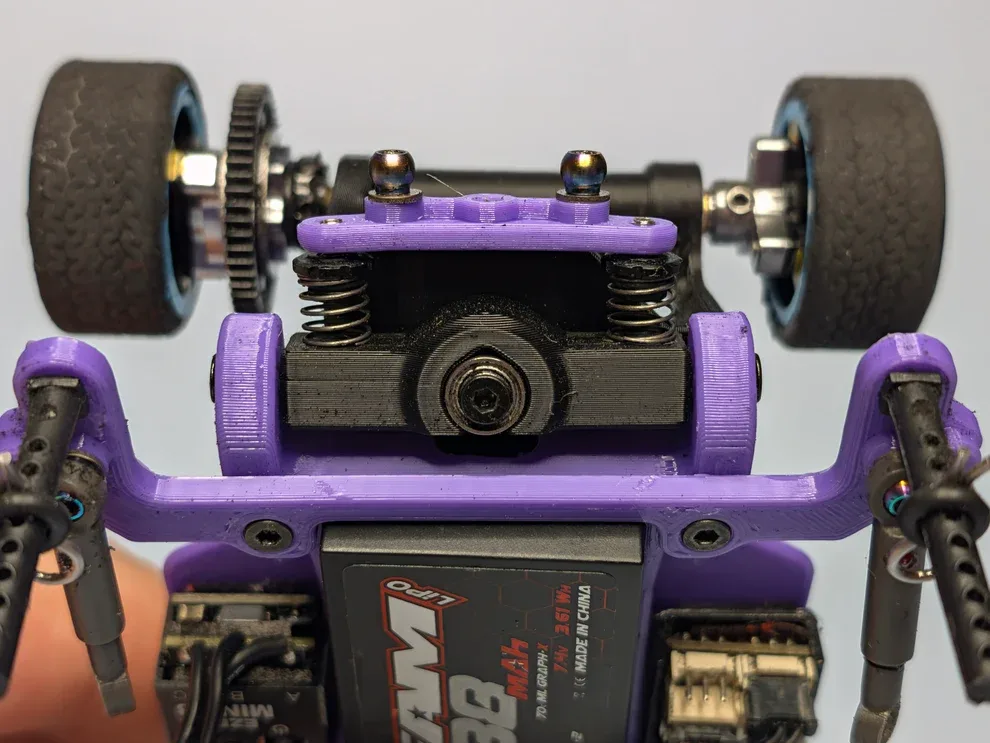
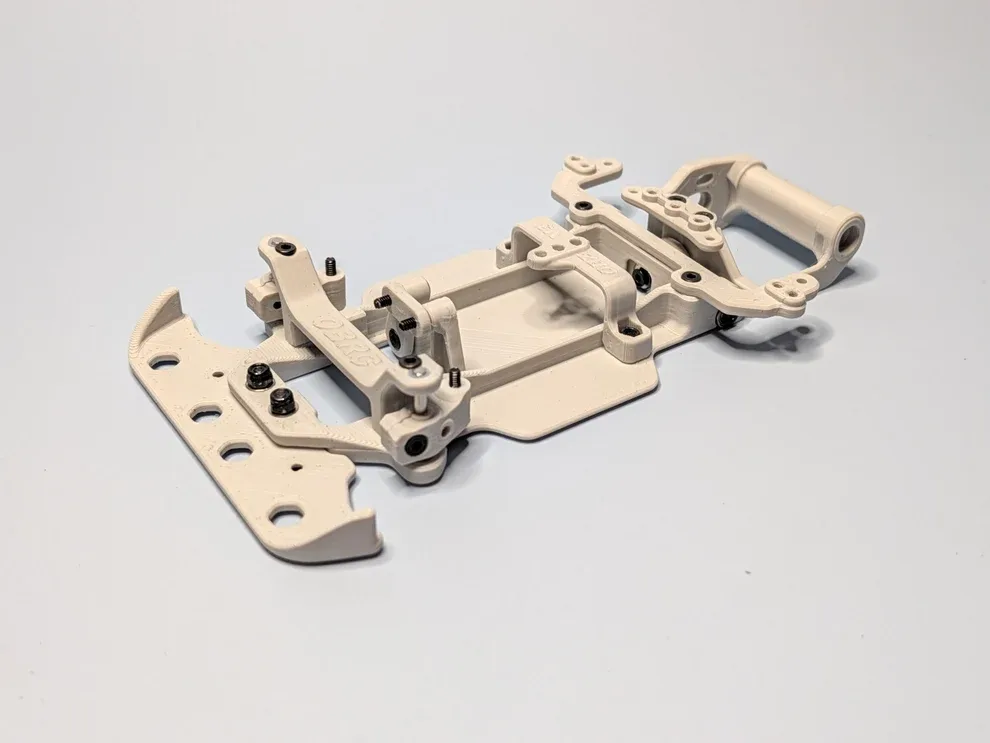
From the photos, the model's identity is immediately apparent. The assembled purple chassis highlights the printed nature of the project, showcasing clean yet visible surfaces and layers, while its architecture is notably low and stretched. The electronics layout is compact and rational, featuring a centrally aligned battery and a low-mounted servo. At the front, a wide pan-style bumper stands out, well-protruding and perforated, while the steering assembly displays intricate kinematics, with linkages that emphasize precision in direction control. The rear showcases a suspension group with vertical springs, a tri-damper system, and a gimbal support, all arranged in a very compact layout around the motor. An interesting shot of the bare white chassis reveals better the volumes, reinforcements, and mounting points.
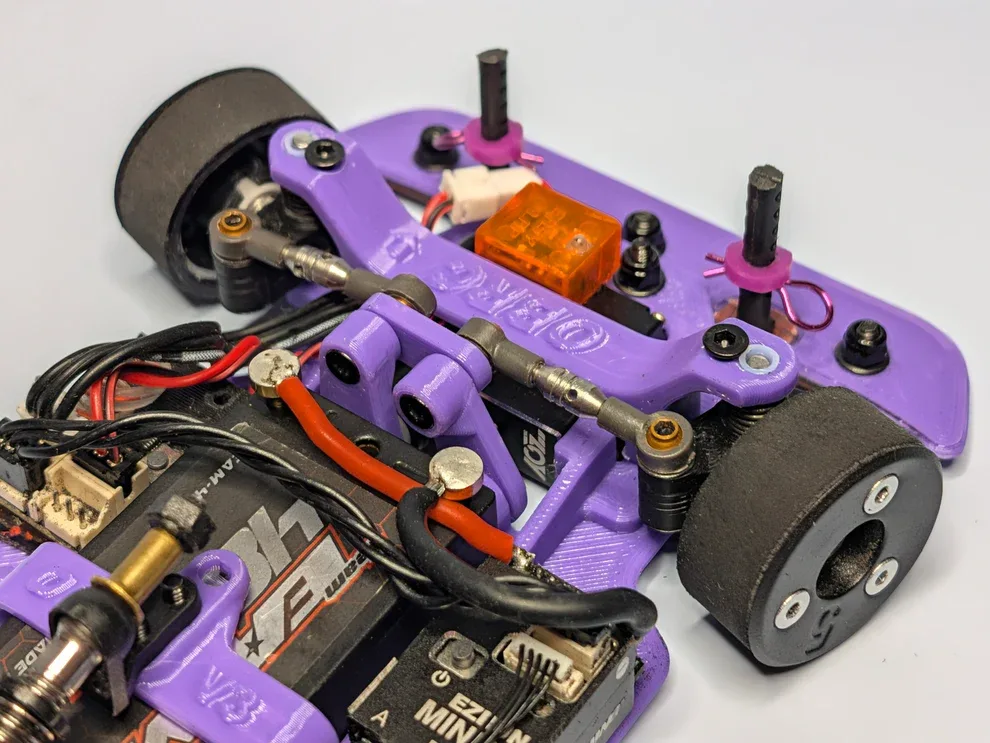
On the technical front, the OBZ V3 introduces three key features that highlight where OBRC aimed to shave off lap times. The first is the multilink steering with adjustable toe and Ackermann: on a 1:28, being able to adjust initial response and how the inner wheel follows the curve means tailoring the behavior between quick entry and stability. The second is the new electronics layout, with the servo positioned in a low center of gravity (LCG) manner and an in-line battery: this translates to a more contained center of mass and a neater distribution of weight. The third is the rear end, featuring a new rear gimbal pivot on bearings, a tri-damper system, and rear springs with tweak adjustment. These solutions, on paper, align with what drivers seek in micro on-road racing: improved rear-end smoothness, more predictable traction, and the ability to fine-tune chassis balance.
Scale: 1:28
Printing Compatibility: 0.4mm nozzle
Compatible Printing Materials: PLA or PETG
Servo Position: LCG, flush with chassis
Battery Position: in-line
Steering: multilink system with adjustable toe and Ackermann
Rear Suspension: rear gimbal pivot with ball bearings
Rear Damping: tri-damper system
Rear Adjustment: springs with tweak adjustment
Included Bumpers: 3 front designs
The standout feature of the OBRC OBZ V3 is the balance between accessibility and true racer adjustments. Those who love building, reprinting, testing, and seeking the right chassis response will find this project particularly intriguing, especially since it accepts standard 1:28 differentials and emphasizes broad compatibility to ease component sourcing. What’s more important to note is the approach: a chassis like this makes sense in the hands of someone willing to dedicate time to precise assembly and tuning, rather than someone looking for an off-the-shelf solution without the bench work.
If the 1:28 world is your territory, the OBZ V3 is one of those models that deserves attention for its philosophy even before its specifications. To see all available details and follow official developments, refer to the OBRC brand website, as indicated by the source: obrcshop.com.